Fruit / FDC 2346410
Raspberries
Raspberries are eaten fresh and used in yogurt or desserts. This is a raw-fruit entry; preserves can contain added sugar.
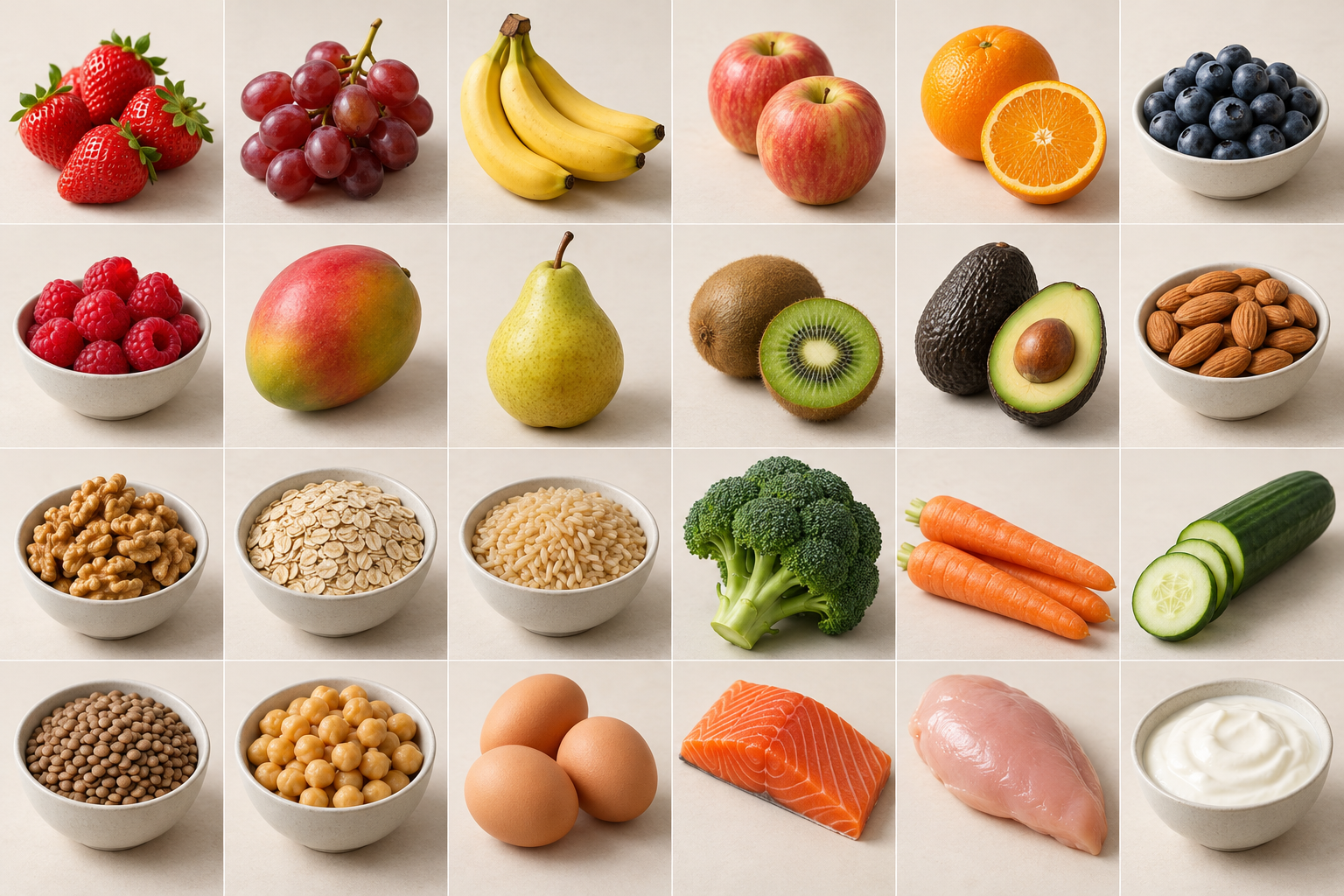
Illustrative image; it does not depict the USDA sample.
What is in this food?
Per 100 g| Energy | 51.4 kcal |
|---|---|
| Protein | 1.01 g |
| Carbohydrate | 12.9 g |
| Total fat | 0.19 g |
| Fiber | Not reported |
| Vitamin C | 23 mg |
| Potassium | 156 mg |
| Calcium | 16.4 mg |
| Iron | 0.45 mg |
| Sodium | 0 mg |
No daily-value percentages are shown: requirements depend on the person and reference standard.
Complete nutrient profile · 31
Source record: Raspberries, raw (USDA). Data is per edible 100 g. An unreported value is not zero.
| Ash | 0.35 g |
|---|---|
| Biotin | 3.43 µg |
| Calcium, Ca | 16.4 mg |
| Carbohydrate, by difference | 12.9 g |
| Citric acid | 1,740 mg |
| Copper, Cu | 0.05 mg |
| Energy (Atwater General Factors) | 57.3 kcal |
| Energy (Atwater Specific Factors) | 51.4 kcal |
| Fructose | 1.68 g |
| Galactose | 0 g |
| Glucose | 0.99 g |
| Iron, Fe | 0.45 mg |
| Lactose | 0 g |
| Magnesium, Mg | 19.2 mg |
| Malic acid | 54.1 mg |
| Maltose | 0 g |
| Manganese, Mn | 0.49 mg |
| Nitrogen | 0.16 g |
| Oxalic acid | 0 mg |
| Phosphorus, P | 27.5 mg |
| Potassium, K | 156 mg |
| Protein | 1.01 g |
| Pyruvic acid | 0 mg |
| Quinic acid | 0 mg |
| Sodium, Na | 0 mg |
| Sucrose | 0 g |
| Sugars, Total | 2.68 g |
| Total lipid (fat) | 0.19 g |
| Vitamin C, total ascorbic acid | 23 mg |
| Water | 85.6 g |
| Zinc, Zn | 0.22 mg |
Compare with
StrawberriesFruit · 32.7 kcal / 100 g↗Red seedless grapesFruit · 77.2 kcal / 100 g↗Ripe bananaFruit · 97 kcal / 100 g↗More comparisons · 23
Raspberries versus Strawberries ↗Raspberries versus Red seedless grapes ↗Raspberries versus Ripe banana ↗Raspberries versus Fuji apple with skin ↗Raspberries versus Navel orange ↗Raspberries versus Blueberries (USDA record) ↗Raspberries versus Tommy Atkins mango ↗Raspberries versus Bartlett pear ↗Raspberries versus Green kiwifruit ↗Raspberries versus Hass avocado ↗Raspberries versus Raw almonds ↗Raspberries versus Raw English walnuts ↗Raspberries versus Rolled oats, dry ↗Raspberries versus Brown rice, dry ↗Raspberries versus Raw broccoli ↗Raspberries versus Raw carrot ↗Raspberries versus Cucumber with peel, raw ↗Raspberries versus Dry lentils ↗Raspberries versus Boiled chickpeas, no salt ↗Raspberries versus Whole egg, raw ↗Raspberries versus Wild sockeye salmon, raw ↗Raspberries versus Chicken meat only, raw ↗Raspberries versus Plain whole-milk yogurt ↗